Solutions › Paddy straw · India
Compressed Biogas · Feedstock Security · India
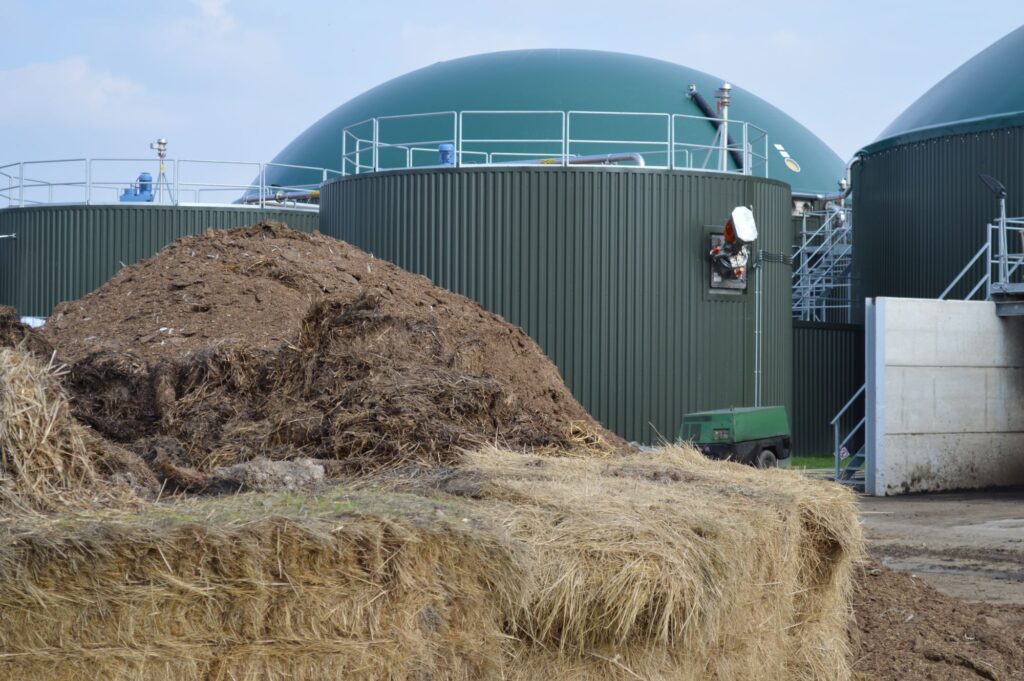
Paddy straw is abundant. It’s a residue. It can be stored for long periods. And yet many CBG investors hesitate to use it — for good reason. It’s abrasive, lignocellulosic, it floats, and it’s harder to digest than many energy crops. We believe there is a smarter way.
Feedstock Freedom
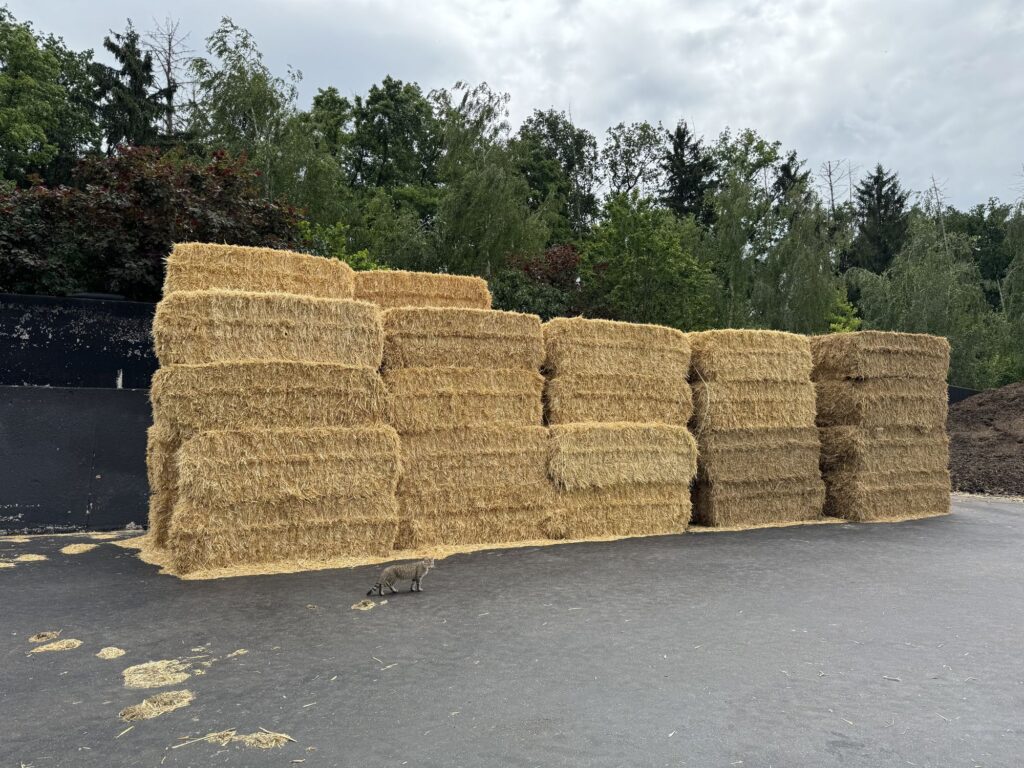
Napier Grass can be an excellent CBG feedstock — easier to process, highly digestible. But it has to be grown. That means your production depends on agriculture, harvesting, weather, water and logistics. Paddy straw has one major advantage: it waits for you. It’s already there, it can be transported, and it can be stored. And it’s a residue — a farm by-product, nothing that has to be grown specifically for your plant.
With the right storage concept, paddy straw is available whenever your plant needs it — during drought, during monsoon, when another supplier fails, or when a sugar mill suddenly delivers less residue than expected. Paddy straw can become an insurance policy for your feedstock supply.
The problem isn't the straw
Conventional preparation tries to finely grind paddy straw before it enters the biological process. But paddy straw contains sharp silica — and silica is highly abrasive. So we stopped fighting the natural properties of straw. We started using them.
Conventional dry preparation
Hammer mills, shredders and dry-processing systems mean high wear from silica
High electricity consumption, dust, maintenance and spare parts
Extrusion improves fibre breakdown — but adds energy and equipment
Dry straw floats: fed in wrong, floating layers form and mixing effort rises
And, after all that, additional CAPEX and OPEX
The SLP approach
Cut coarse, not pulverised — only as fine as the next step needs
Mixed with digestate so the straw absorbs liquid and stops floating
Fine grinding happens wet, inside the liquid phase
Far less energy-intensive dry grinding
Difficult paddy straw becomes a controllable feedstock
Why grind dry what you can grind wet?
Each step gets the conditions it needs. The objective isn’t more complicated technology and equipment — it’s simpler, more stable operation.
01
Reduce ~1 m straw to around 5–10 cm. Not millimetres, not with maximum energy — just enough for the next step.
02
Instead of grinding dry straw, we add liquid — and time. The straw absorbs it, gets heavier, stops floating and becomes easy to handle.
03
The prepared material enters our high-load hydrolysis stage, where controlled biological breakdown begins.
04
Only now do we reduce the fibres to the millimetre range — inside the liquid phase, ready for biological conversion.
05
From feeding the hydrolysis stage onwards, the process runs under our process control system.
We didn’t just study machines. We studied the cow. A cow doesn’t pulverise dry straw in a hammer mill — nature combines mechanical breakdown, liquid, time and biology. Our two-stage system separates functions that single-stage digesters try to do at once: prepare, hydrolyse, wet-grind, digest.
An empty digester doesn't generate cash flow
8,000+ hours
Your financing continues every day. Your fixed costs continue every day. Your team gets paid every day. But if your primary feedstock isn’t available for four weeks, that lost production is gone forever. The closer you get to year-round full load, the better your fixed costs spread across every tonne of CBG — and once they’re covered, every additional tonne becomes especially valuable.
Feedstock is not an issue if you have flexibility. We have already digested 57 different feedstocks — ask for the full list.
Options reduce risk
You don’t have to use paddy straw every day. It doesn’t even have to be your primary feedstock. But if your plant can process it, you have another option — and options are what carry a 20-year investment.
A storable option that keeps for long periods
A locally available residue, already in the region
No cultivation specifically for your biogas plant
Independent of one crop, one harvest, one supplier
Ready when drought, monsoon or a supply gap hits
Napier Grass becomes expensive? You can react.
Press Mud isn’t available? You can react.
The harvest is poor? You can react.
A supplier fails? You can react.
There’s paddy straw in storage — and your plant knows how to use it.
That's Feedstock Security
More hours
More operating hours across the year
More CBG
More tonnes produced against the same fixed costs
More revenue
Production you would otherwise lose forever
Less risk
A plant that can react instead of standing still
Our straw experience comes from real plants
SLP doesn’t sell shredders, extruders, pumps or spare parts — so we don’t earn money by putting as much equipment as possible into your plant. We earn it by engineering a better one. We choose the technology that makes sense for your feedstock and your project — not the equipment we happen to need to sell.
“Perfection is achieved, not when there is nothing more to add, but when there is nothing left to take away.”
— Antoine de Saint-Exupéry
That is exactly how we engineer: we make your plant as simple as possible.
30+
years of biogas experience
50+
projects across 14 countries, four continents
50%+
straw-based feedstock mixtures handled in operating plants
750+
biogas energy-efficiency projects — we’ve seen what works
Talk to our team
If you’re planning a CBG plant in India, our first conversation shouldn’t be about which digester you buy. It should be about your feedstock: what’s available today, what it costs, how secure the supply is, what happens during monsoon and drought, and whether your plant can actually process the alternatives. That’s where a successful CBG project begins.
Or directly: +49 8734 939770 · info@snow-leopard-projects.com
Practical knowledge, funding programmes and news from Snow Leopard Projects — compact by email.